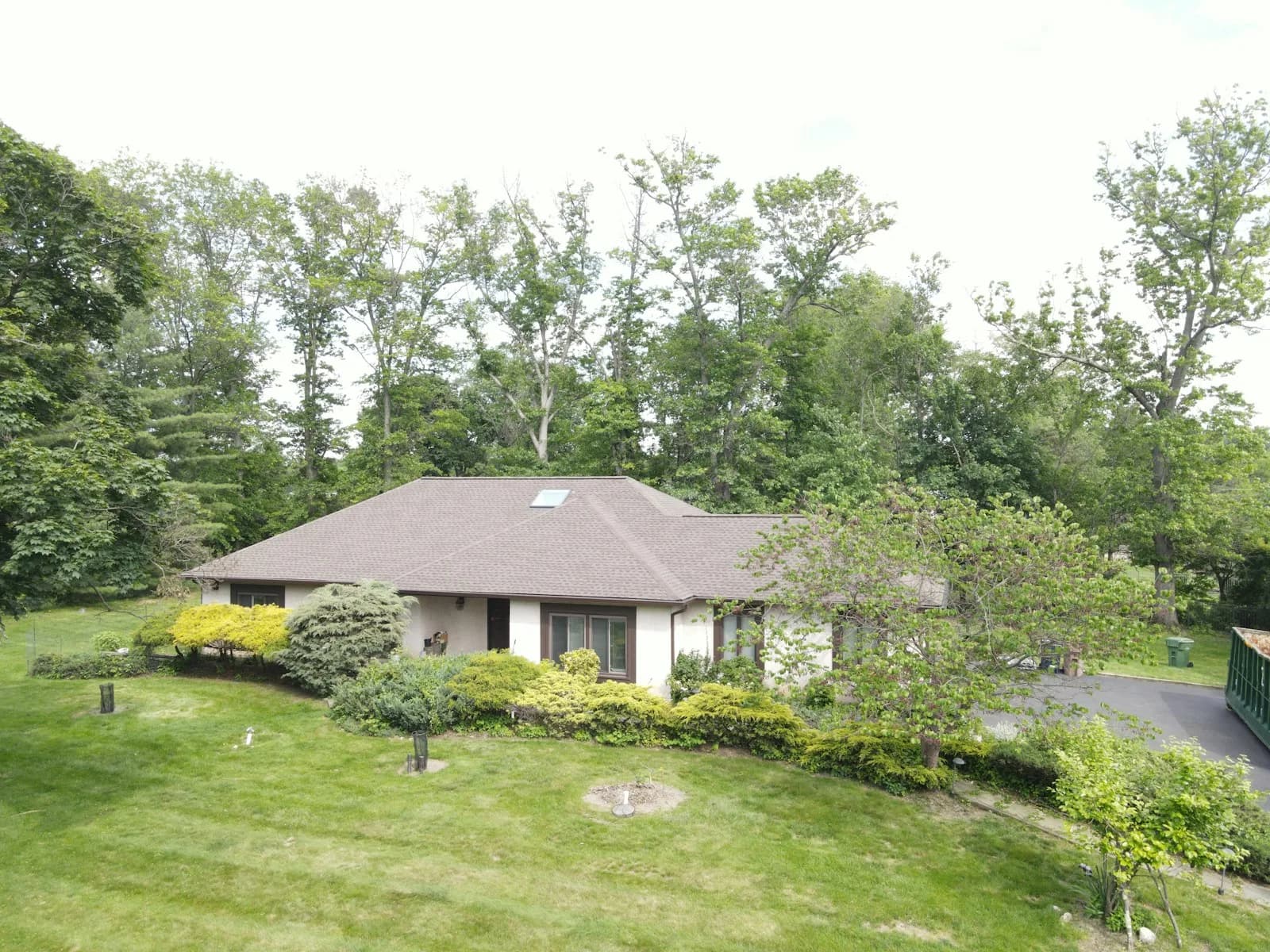
Exposure changes across the same property
A home beside open ground may have an unobstructed windward side and a sheltered rear slope. A tree line can introduce debris on another part of the roof. Describe these differences when reporting damage rather than treating the whole building as having one exposure. After wind, observe displaced material from the ground and note new interior symptoms.
An agricultural setting does not determine the roof material. Asphalt may be appropriate, while residential metal may be worth comparing for suitable geometry. Product requirements and the actual roof assembly take priority over the visual character of neighboring buildings.
Inspect before repeating a patch
If the same ceiling mark returns after earlier work, collect dates and invoices. Ask whether the original repair addressed a shingle, a penetration or a wall connection. Water traveling along framing can make the entry point difficult to infer from the room below. Repeating a surface patch without establishing the source may leave the problem unchanged.
Decking, flashing and valley condition affect repairability. A limited defect can support a targeted scope, but widespread wear may make replacement planning more useful. The assessment should explain the evidence and the limits of what could be seen.
Long roof runs need a complete water route
Where a home has broad slopes, consider how runoff reaches gutters and downspouts. Concentrated discharge near a valley can expose an inadequate edge detail. Overflow at one end may reflect an obstruction, condition problem or layout issue; cleaning alone is not always the answer.
Record where water is observed during rain without climbing a ladder. Mention fascia staining and recurring wet areas near the building. Underground drains and foundation drainage are separate scopes unless specifically included.
Plan residential work around rural access
Describe the driveway, turning space and routes unsuitable for loaded vehicles. Identify gates, animals and areas needing protection. If you know the location of a septic system or well, provide that information rather than assuming it can be located during roofing work.
List a detached garage separately. Barns and agricultural production buildings are not advertised as an automatic extension of residential service. Confirm the building use and available scope before scheduling.
BEFORE YOUR ASSESSMENT
Your Deerfield Township property checklist
- Specify Deerfield Township, not Upper Deerfield.
- Describe exposed edges and nearby tree cover.
- List separate structures individually.
- Identify equipment access and protected areas.
Questions about roofing in Deerfield Township
Is Rosenhayn a separate municipality on this site?
No. Rosenhayn is addressed within Deerfield Township. Use the property address and township when requesting service so it is not confused with Upper Deerfield.
Does living beside farmland make metal the required choice?
No. Compare materials using slope, geometry, deck condition, attachment and maintenance needs. Surroundings inform the assessment but do not prescribe a material.
Can every building on my Deerfield property be assessed together?
List each structure and its use when inquiring. Buildings may need different scopes, and agricultural-building roofing has not been confirmed as an offered service.
Local context checked September 18, 2026. Roofing priorities are property-specific guidance, not claims about every building.
County municipal directoryCounty farmland preservation plan