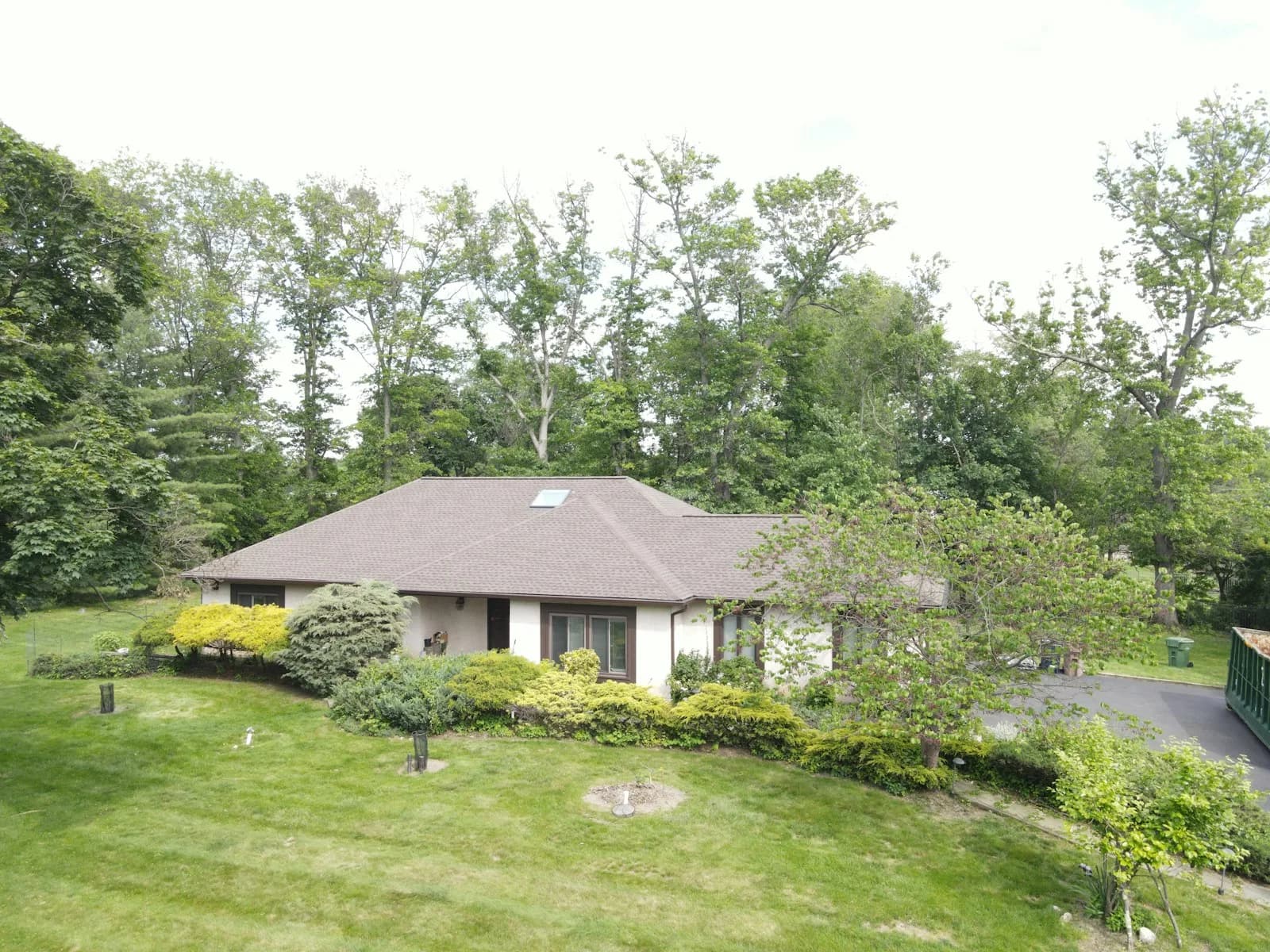
Evaluate the whole assembly before choosing a covering
An assessment should separate isolated defects from widespread wear. Discuss recurring leaks, repaired areas, visible sagging and the condition of penetrations. An attic review, where safely accessible, can add information about moisture and ventilation. Some deck damage becomes visible only after tear-off; a reliable proposal explains that uncertainty instead of pretending every concealed condition is known.
Roof geometry affects both the material and the labor. Dormers, valleys, sidewalls and transitions to porches all require detailing. Compare proposals by the actual assembly included, rather than by square footage or the price of field shingles alone.
What belongs in a replacement scope
Removal of the existing covering allows the exposed deck to be examined. The scope should identify how unsound sheathing will be priced and replaced, what underlayment will be installed and where self-adhered water protection is appropriate to the project and applicable requirements. Drip edge, starter courses and ridge details are functional components, not finishing extras.
Flashing at walls, chimneys and penetrations needs its own plan. State which metal will be replaced, which can be retained after inspection and how any reused component will integrate with the new roof. Ventilation design should consider both intake and exhaust, along with air leakage from the living space.
Plan around the property and the people in it
For a larger rural home, talk through delivery access, truck turning space and material staging before work starts. For a city property, discuss nearby windows, neighboring buildings and pedestrian access. Identify parking, gardens and outdoor equipment that need protection. Detached structures are separate scopes; agricultural-building work should never be assumed from the address alone.
Noise, vibration and temporary access restrictions are expected topics in the plan. Ask how weather interruptions will be handled, how open areas will be protected and how the site will be checked for debris after the work. A completion date depends on the actual scope and conditions.
Compare value without assuming a warranty
Ask for the exact product line and written manufacturer and workmanship terms. Coverage may depend on installation requirements, registration, maintenance or transfer conditions. No certification, enhanced warranty or financing is implied on this website. Obtain the documents for the proposed work before choosing between quotes.
The final walkthrough should cover completed details, any additional deck work, cleanup and the contact process for follow-up concerns. Keep photos, the contract, product information and receipts together so the next roof assessment starts with a useful history.
Your roof replacement questions
Does an old roof always need complete replacement?
No. Age is a clue rather than a diagnosis. A serviceable covering with one failed flashing detail may support a targeted repair. Repeated failures or widespread brittleness make a broader replacement comparison more useful.
Can you quote concealed decking damage in advance?
A proposal can explain unit prices or allowances, but the full condition may not be visible until removal. Ask how discoveries are photographed and approved before extra work proceeds.
Should my low-slope porch use the same shingles?
That depends on measured slope and the product’s installation limits. A porch may need a different roof system and a carefully designed transition to the main roof.