Look beyond the first missing shingle
Wind may lift tabs, displace ridge pieces or disturb edge metal and flashing. A section can settle back into place and still need professional evaluation. From the ground, record displaced material, unusual roof lines and debris. Indoors, note new stains or dripping, even if the exterior covering looks unchanged.
Trees introduce a different pattern of damage. A falling limb can scrape granules, puncture the covering or stress the deck. The assessment needs to consider the path of impact and the surrounding structure, not only the point where the branch came to rest.
A useful inspection connects event and condition
Tell the inspector when the storm occurred, what changed afterward and whether the roof had earlier leaks. Photographs before and after the event can help separate existing wear from new damage, but an image alone rarely proves the condition of concealed layers. Avoid describing every mark as storm damage without supporting evidence.
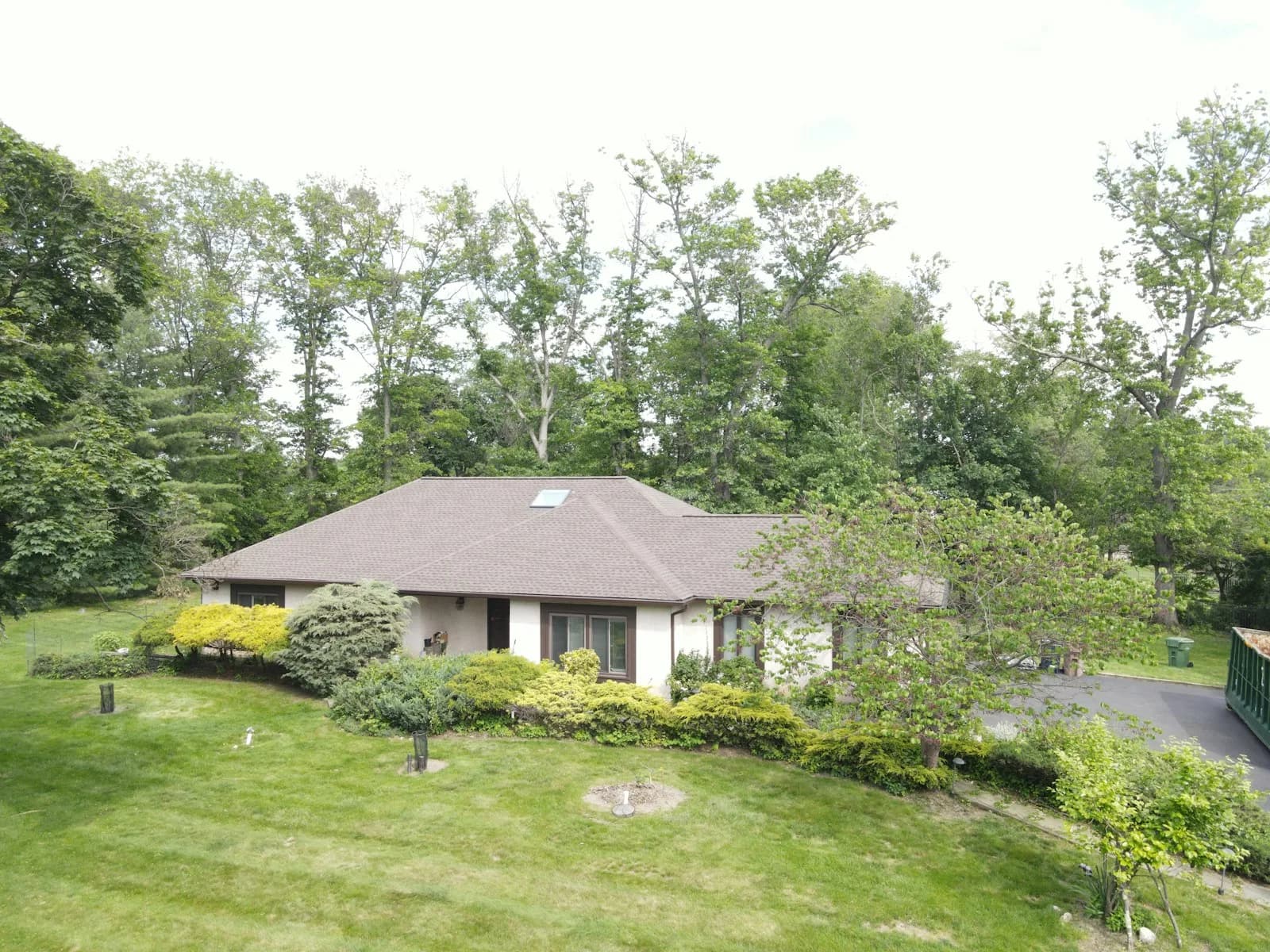
On a wooded Maurice River property, safe access may depend on clearing unstable trees first. At an open township site, wind exposure may put special emphasis on edges and ridges. The inspection scope follows those observations without making unsupported wind-speed claims.
Plan mitigation, repair and follow-up
An active leak may require a discussion of temporary protection before a permanent repair can be completed. Safe access and weather determine what can be attempted. Any temporary measure should have a follow-up plan, especially when water may already have reached insulation, ceilings or electrical components.
Permanent work can involve shingle replacement, flashing reconstruction or deck repair. Where damage is widespread, compare a full replacement scope. Ask how adjacent sound material will be protected, how the repaired area will tie in and what visual mismatch may remain.
Documentation supports decisions; it does not guarantee a claim
Keep dated observations, estimates and records of authorized work. Ask your insurer which information it needs and who must approve changes. Roofing findings can describe visible conditions and recommended work, but coverage and payment remain the insurer’s decisions. Do not sign a scope you do not understand simply because it is described as storm-related.
A later check may be useful after repair if the original leak was intermittent. Track whether the same symptoms recur and report them promptly. A dry day is not by itself a test of a rain-related failure.
Your storm & tree damage questions
Does a storm inspection mean the roof needs replacing?
No. Localized damage may support a repair. The decision depends on the extent of damage, the remaining covering and whether a durable connection to sound material can be made.
What if shingles are on the ground but I cannot see a gap?
Photograph the debris safely and arrange an inspection. The material may have come from a less visible slope or another building. Do not climb up to identify its source.
Will insurance pay for the recommended work?
That depends on the policy, cause, condition and claim review. No payment, deductible waiver or claim outcome is promised.