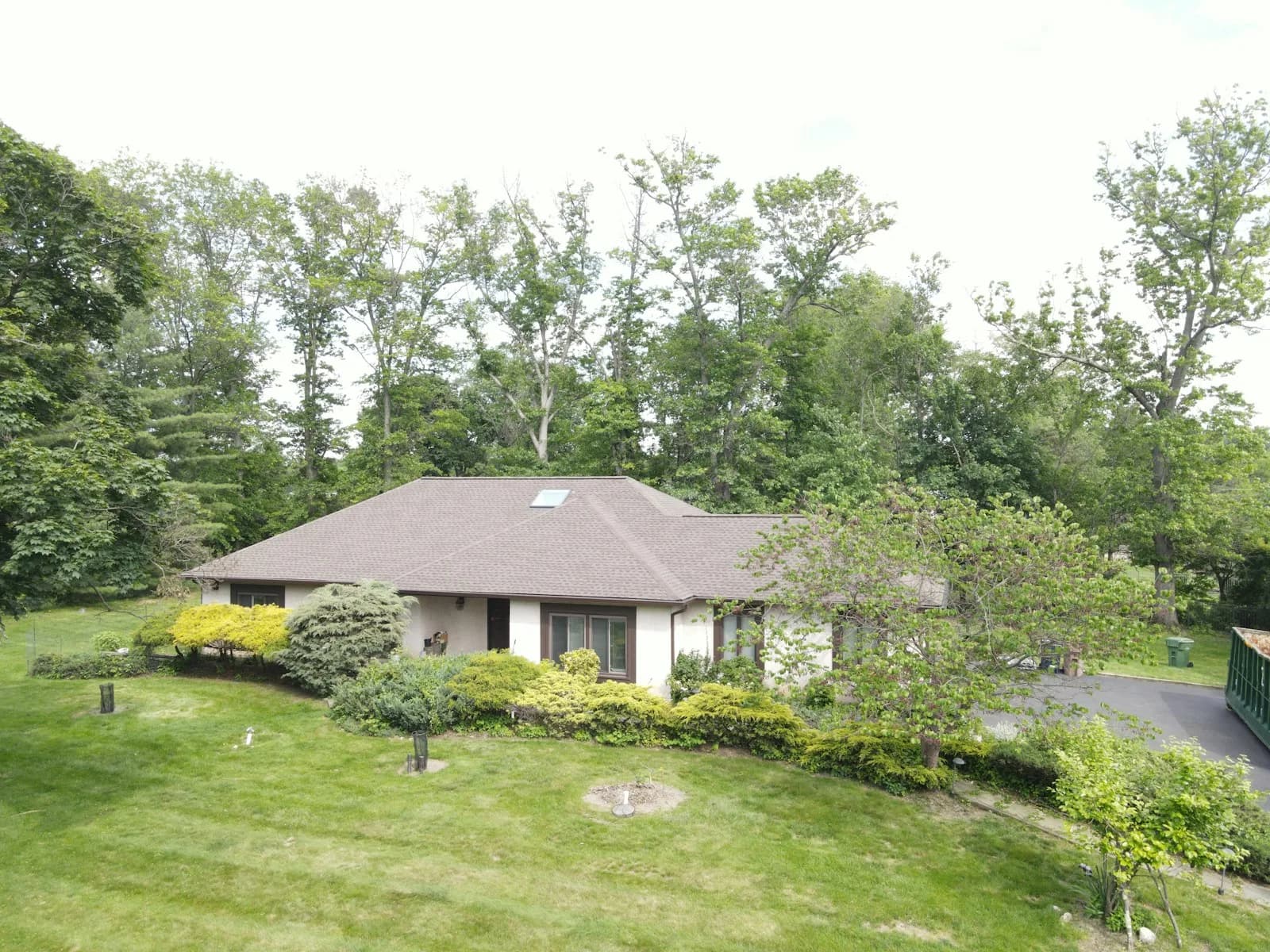
Start below the trees, with safe observations
Look from the ground for leaves gathered where slopes meet, branches touching the covering or material displaced after wind. A shaded roof is not automatically damaged, and a dark area cannot be diagnosed from its color alone. Describe the change and let condition guide the assessment.
If a limb struck the building, keep clear of it and any affected room. Damage can extend beyond the visible scrape to the deck or supporting structure. Tree removal and roofing are different scopes, and unstable branches may need attention before roof access is possible.
Inspect before clearing away the evidence
Photographs taken safely can document where debris settled or a branch contacted the roof. Do not move hazardous material yourself. A professional assessment should consider the impact path, adjacent covering and any interior symptoms rather than only the point of contact.
For a non-impact leak, note its timing and the roof features nearby. Valleys collect water as well as debris. A vent boot, flashing connection or obstructed outlet may be relevant even when the broad roof surface looks intact.
Connect drainage and attic observations
Leaves can restrict runoff, while roof-edge details determine whether water reaches the gutter cleanly. Ask whether a problem is maintenance, a damaged component or a layout issue. Guards are not a promise of maintenance-free drainage, especially where the debris type varies through the year.
Attic moisture also deserves a separate line of inquiry. It may relate to indoor air leakage, exhaust arrangements or ventilation rather than rain entry. Report visible patterns and timing without accessing an unsafe attic. A covering replacement alone does not necessarily resolve that source.
Choose materials and work scope for the actual parcel
An asphalt or residential metal proposal should account for slope, penetrations, support and future maintenance access. Consider how tree contact will be addressed by the appropriate professional. Do not select material solely because the property is described as wooded.
For Pinelands questions, use the official property lookup and consult the relevant authority about the proposed work. Township context is not a parcel determination. Roof inquiries for detached or agricultural buildings need separate scope confirmation; no universal outbuilding service is implied.
Questions about roofing in Maurice River Township
Is every Maurice River home surrounded by wetlands?
No. The township contains varied properties. Describe the actual lot and use official mapping for parcel questions rather than inferring conditions from the township name.
Should leaves in a valley be treated as a roof leak diagnosis?
They are an observation worth reporting, not proof of the entry point. The covering, flashing, drainage and interior symptoms should be considered together.
Do Pinelands references establish the permit requirements for my roof?
No. Check the property and proposed scope with the relevant authorities. This guide does not make parcel-specific approval or exemption claims.
Local context checked September 18, 2026. Roofing priorities are property-specific guidance, not claims about every building.
County municipal directoryPinelands property lookupPinelands Commission township report