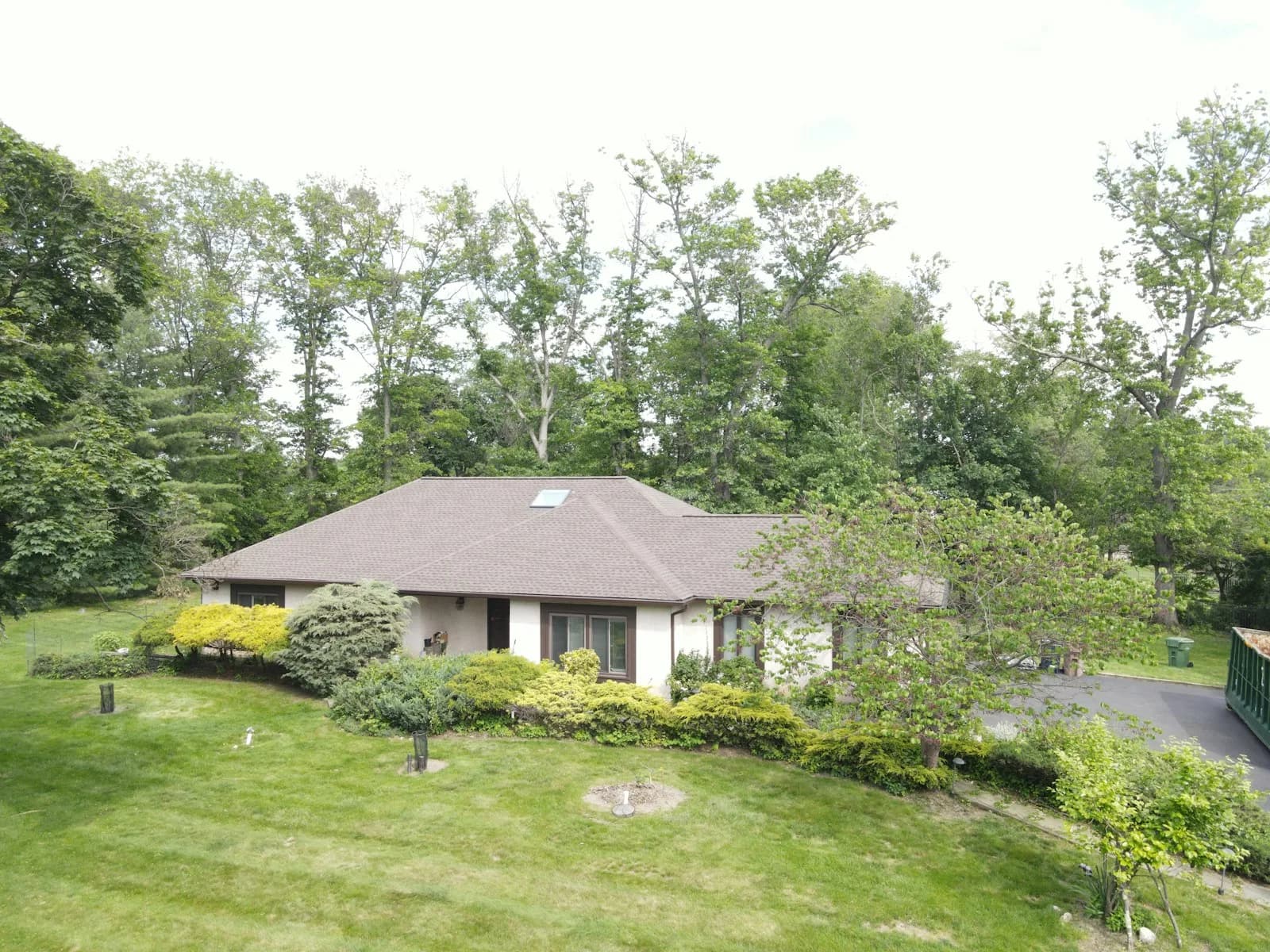
Exposed edges and sheltered valleys need different questions
Wind observations often begin at an edge, ridge or displaced piece of covering. Debris concerns may concentrate where slopes meet below trees. Report both when they occur on one house. The inspection should follow evidence rather than treating rural properties as a single roof condition.
A fallen shingle does not establish which slope it came from. Photograph it safely and note the date. Leave roof access to equipped professionals, especially after a storm when footing and nearby branches may be unstable.
Consider the full path of an impact
A limb can scrape a covering, catch an edge or strike the deck before resting elsewhere. The visible mark may be smaller than the area needing inspection. Ask for consideration of surrounding roof lines and indoor symptoms as well as the contact point.
Tree work and roofing are separate responsibilities. Do not assume a roof visit includes removing a dangerous tree. Keep clear of suspended branches and explain overhead hazards when requesting help. If structure or electrical equipment is affected, additional professionals may be needed.
Compare materials against geometry and care
Residential metal and asphalt shingles can be discussed where structure and slope are suitable. Consider penetrations, valleys, attachment and future access. A simple-looking roof can still have complicated chimney or wall details. A new material should not be chosen as a substitute for diagnosing a leak.
Request exact product information and written warranty terms. A rural address does not guarantee lifespan or make a system maintenance-free. If the existing covering is repairable, compare that option before committing to replacement.
A workable site plan protects the property
Long drives, narrow gates and soft ground affect material delivery and debris removal. Tell the contractor where vehicles may travel and identify known underground services or septic areas. Agree on staging before loaded equipment arrives, with a plan for protecting landscaping and everyday access.
Describe detached garages and other buildings individually. Agricultural production roofs are not automatically included with residential service. Retain the house roofing scope, photos and maintenance guidance so later assessments can distinguish new changes from existing conditions.
BEFORE YOUR ASSESSMENT
Your Stow Creek Township property checklist
- Compare open and tree-covered slopes.
- Record wind-related changes from the ground.
- Identify delivery and ground restrictions.
- Keep residence and outbuilding scopes separate.
Questions about roofing in Stow Creek Township
Do open fields make every roof slope equally exposed?
No. Geometry, orientation and trees create different conditions. Assessment should address the actual property rather than infer uniform exposure.
Can a limb cause damage without leaving a hole?
Yes. Scrapes, displaced covering or stressed decking can occur without an obvious opening. Keep clear and describe the impact path for evaluation.
Which access details matter for a Stow Creek inquiry?
Mention gates, turning space, weak surfaces, animals and known underground infrastructure. Identify the building and routes that should not be used for deliveries.
Local context checked September 18, 2026. Roofing priorities are property-specific guidance, not claims about every building.
County municipal directoryCounty farmland preservation planStow Creek overview