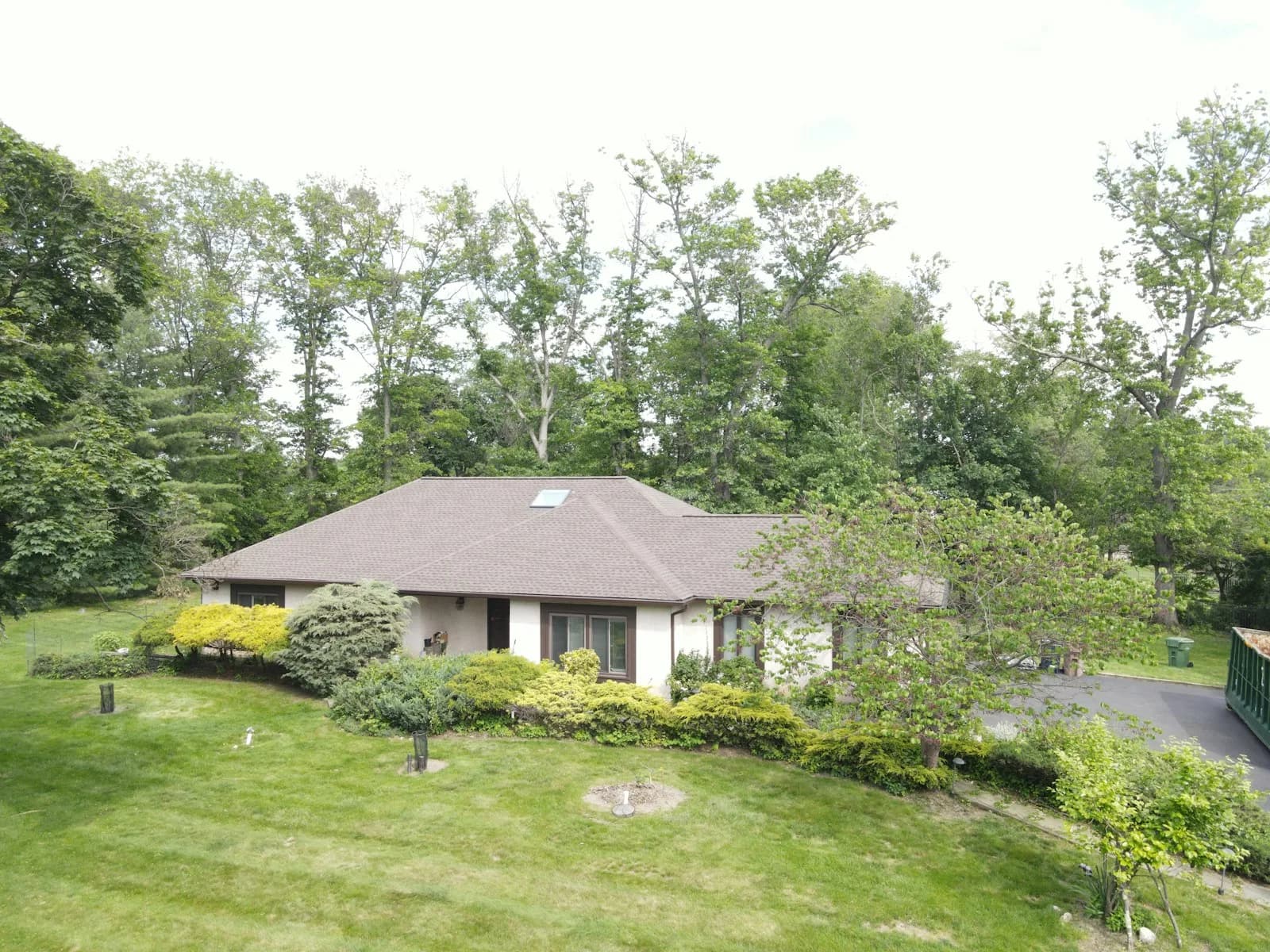
Map the roof areas that belong in the job
The main house may not share the age or material of a porch, garage or later extension. List each section and any known installation dates. If records are incomplete, describe what has changed rather than guessing. The assessment can then focus on condition and connections.
A phased replacement needs a plan for where new work stops. Ask how transitions will shed water and whether the next phase would disturb recently completed areas. An apparently economical partial scope can become less useful if it leaves an unreliable junction.
Use leak timing to focus inspection
Report whether water appears during steady rain, only with wind or well after the weather passes. A leak near a chimney or wall may have more than one possible source. Ground-level photos and a simple timeline help establish the conversation without unsafe roof access.
Temporary sealant may hide rather than explain a defect. Ask what the permanent repair changes and how it connects to sound surrounding material. If the deck or covering is extensively deteriorated, compare a broader plan with the limits of another patch.
Compare residential materials as complete systems
Asphalt and metal options should be compared with preparation, underlayment, attachment, flashing and ventilation included. Material appearance alone does not settle suitability. Slope, geometry and the supporting assembly determine which products can be considered.
For metal, clarify fastener and finish maintenance. For shingles, discuss repair matching and the condition of the deck. Ask for actual product and workmanship terms; neither a lifespan nor a special warranty should be assumed from a material name.
Give drainage and access a place in the proposal
Describe where gutters discharge, where overflow appears and whether runoff concentrates below a valley. Roof-edge details and the gutter arrangement should be considered together. Underground drainage and landscape changes are separate unless written into the scope.
On a larger property, identify delivery routes, gates and areas that cannot carry equipment. A separate barn or working structure must be described independently; agricultural-building service is not automatically offered. Save final documentation by building and roof section so later assessments have a clear history.
BEFORE YOUR ASSESSMENT
Your Lawrence Township property checklist
- Specify Lawrence Township, Cumberland County.
- Include Cedarville where it is the mailing community.
- Identify separate roof ages and materials.
- Discuss water discharge before replacing gutters.
Questions about roofing in Lawrence Township
Which Lawrence Township is covered by this guide?
The Cumberland County township associated with Cedarville. It is not Lawrence Township in Mercer County. Include the complete property address to disambiguate.
Can a replacement be split between the house and addition?
Possibly, if each section’s condition and the transition allow a reliable scope. Ask whether phasing will create extra work or leave a weak connection.
Is Cedarville a separate official municipality here?
No. It is handled within Lawrence Township. The website maintains one guide for each of Cumberland County’s 14 municipalities.
Local context checked September 18, 2026. Roofing priorities are property-specific guidance, not claims about every building.
County municipal directoryLawrence Township municipal clerkCounty agricultural history